

There is much talk about tackling educational disadvantage. This is completely understandable. Sir Kevan Collins, once described it as the ‘most stubborn challenge facing UK schools’. So it’s good that we’re talking about it. The problem is, much of it is not useful. Whilst almost always implemented with the best possible intentions, many interventions to tackle socio-economic disadvantage are fleeting, not evidence informed and not focused on changing the student as a learner.
There is a shining beacon of light in this arena though. His name is Marc Rowland! Marc has worked with hundreds of schools in this area. He sees regularly what works and what doesn’t - and talks about this with great clarity. This week he posted a document that outlines seven principles for an effective Pupil Premium strategy. This is what Marc posted:
Strategies should be something we have the capacity to enact effectively
They should not be a wish list. The more we try to do, the less effective we are to implement well. Many interventions don’t have an impact because they simply don’t happen (or don’t happen with fidelity). Focus on the things that are most in your gift.
Our disadvantaged pupils are not a problem to be resolved
They are our children, and the most effective approaches focus on giving staff the capacity, expertise, professional development and the support to help pupils to thrive. Poverty puts pupils at risk of underachievement, not pupil premium eligibility.
Children thrive in school when they experience meaningful success in the classroom
Success leads to motivation. Confidence is a cognitive process
Focus on underlying causes, rather than symptoms
Low attainment, inconsistent attendance are a symptom of underlying, complex issues. They are a lag effect. You cannot intervene to a symptom or label. The earlier that we address challenges, the better all pupils do at school.
Whilst diagnostic and summative assessment are vital…
We also need to understand the challenges through observation of pupils and their learning experiences in the classroom. This is also key for evaluating the effectiveness of our strategies and how well they are being enacted.
There are some small things that we can do in the classroom
These are the things that can make a significant difference to all pupils, including those from disadvantaged backgrounds. Checking for understanding, ensuring misconceptions are addressed at the point of learning, not making presumptions of language comprehension or background knowledge. Ensuring that pupils are socially and academically included.
Strategies are effective when they impact pupils as learners
Don’t mistake activity for impact. Use research evidence to shape practice and implementation. Our role not to ‘save’ pupils - but to empower them with choice and agency - so that school is somewhere to thrive, not something to get through.
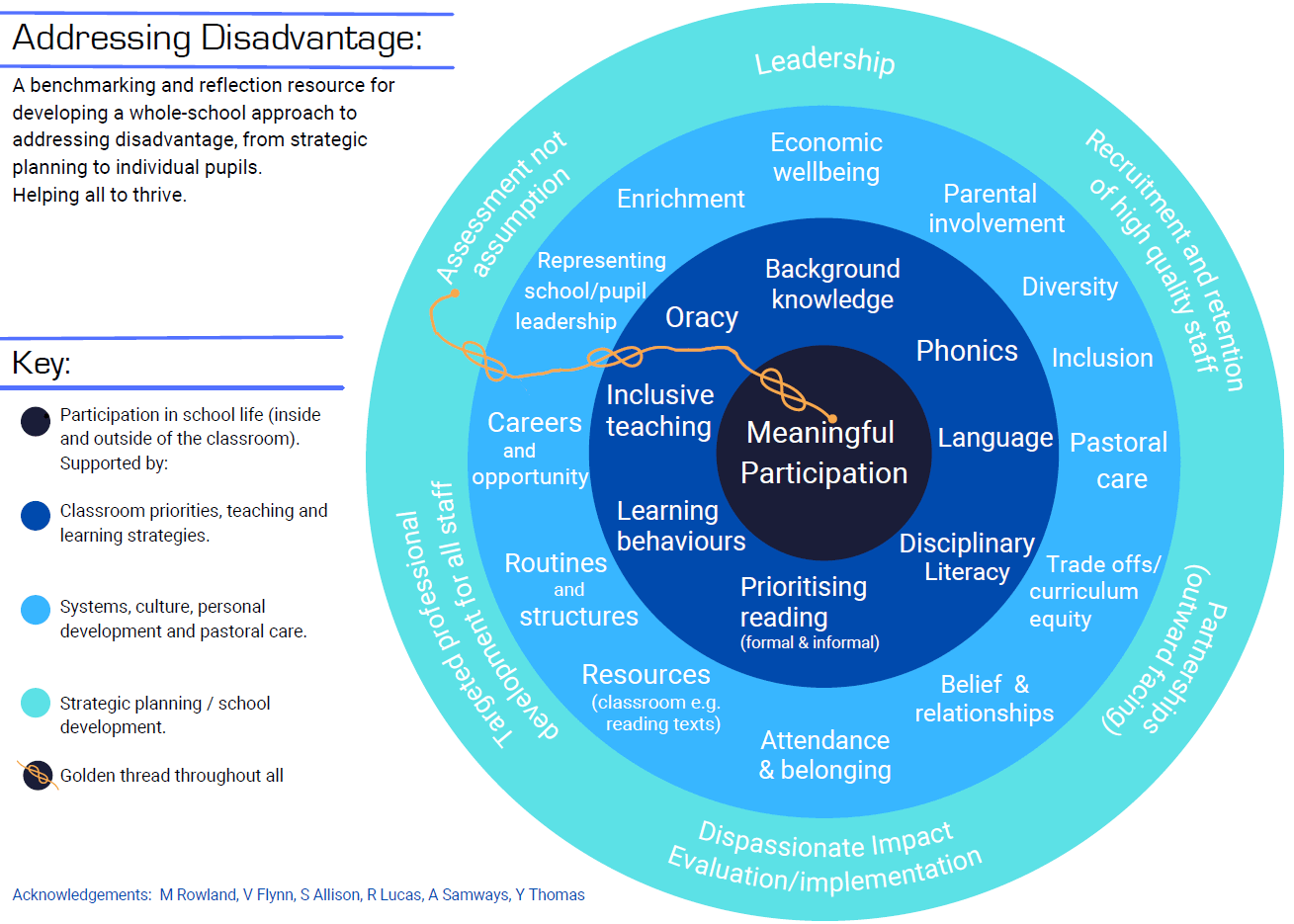
To supplement this, Marc has summarised the areas to focus on for an effective whole school approach to tackling educational disadvantage in this diagram:
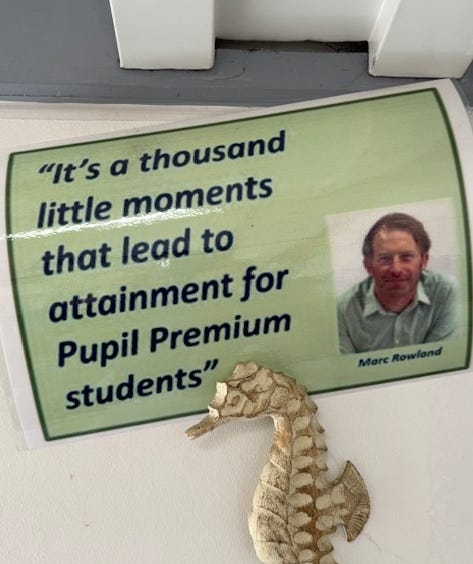
I’ve been fortunate enough to listen to Marc talk on this topic on a number of occasions. One of the most powerful things he said to our staff, at an INSET day a few years ago, can be seen below. It’s still displayed in a number of offices around the school:
Great to see this Shaun, so important